The deep integration of artificial intelligence and touchscreens is revolutionizing human-computer interaction, propelling the interactive experience from traditional passive touch control to a new stage of context-adaptive intelligent interaction. For a long time, touchscreens have been merely passive input hardware tools, only able to receive manual touch commands from users, resulting in a fixed and rigid interaction mode. However, empowered by AI technology, touchscreens have broken through the limitations of single-interaction, acquiring core capabilities such as environmental perception, behavior understanding, and intelligent response, completing a fundamental upgrade from "mechanical touch control" to "intelligent control."
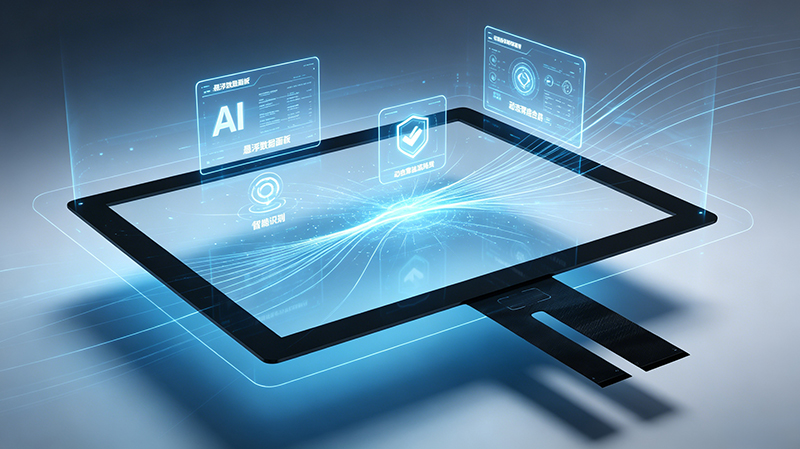
The core logic of this coupling lies in achieving omni-channel perception and dynamic adaptation through multi-sensor fusion technology. Devices can use multiple sensors such as cameras, microphones, and accelerometers to collect real-time information on user actions, physiological states, and the surrounding environment. Combined with AI's contextual semantic analysis capabilities, this allows for dynamic adaptation of interface layout, operational logic, and feedback formats, achieving personalized adaptive interaction for each user. This advantage is particularly evident in various application scenarios: In driving scenarios, the system automatically simplifies the touch interface, enlarges function buttons, and simultaneously switches to voice control mode, avoiding safety hazards associated with manual operation; in reading scenarios, it intelligently adjusts font size, screen brightness, and color temperature based on the user's focus, adapting to their eye habits; and for elderly users, the device proactively displays operation instructions and demonstrates gestures, lowering the barrier to entry for smart devices.
Beyond scene-adaptive adjustment, AI endows the touchscreen with personalized autonomous learning capabilities, enabling an advancement in interaction from "passive response" to "proactive prediction." AI continuously records and analyzes user operating habits, usage preferences, and behavioral patterns, dynamically iterating and updating user-specific behavioral models to accurately predict potential user needs and proactively adapt interactions. For example, for users who frequently swipe to check the weather, the system can automatically display the three-day weather forecast in advance; by capturing user emotional fluctuations through camera micro-expression recognition and voice tone analysis, it proactively pushes soothing audio and pops up rest reminders, catering to the user's real-time needs.
Simultaneously, technological integration further breaks down the physical interaction boundaries of traditional touchscreens, constructing a multimodal, seamless interaction system. The device is no longer limited to a single manual touch operation mode, but is compatible with multiple input modes such as gestures, eye tracking, and voice, enabling multimodal collaborative interaction. When the user's gaze rests on a certain area of the interface, the system can automatically highlight the corresponding function and expand relevant information, eliminating the need for manual touch operation, greatly simplifying the interaction process, and achieving efficient and seamless human-computer interaction.
The deep integration of touchscreens and AI not only greatly improves the convenience, comfort, and efficiency of human-computer interaction, but also reshapes the relationship between humans and smart devices, transforming cold hardware tools into intelligent partners that understand, adapt to, and serve users. However, at the same time, technological development still faces many challenges, such as privacy and security risks arising from user behavior data collection and the lack of transparency in intelligent algorithms, which urgently need to be addressed. In the future, the development of this technology will focus on the core principle of being human-centered, seeking a balance between intelligent and accurate response and user privacy, security, and operational autonomy, to achieve a safer, more humanized, and more intelligent evolution.

 Español
 Portugues
 Pусский
 Français
 한국어
한국어 العربية
 中文
中文